
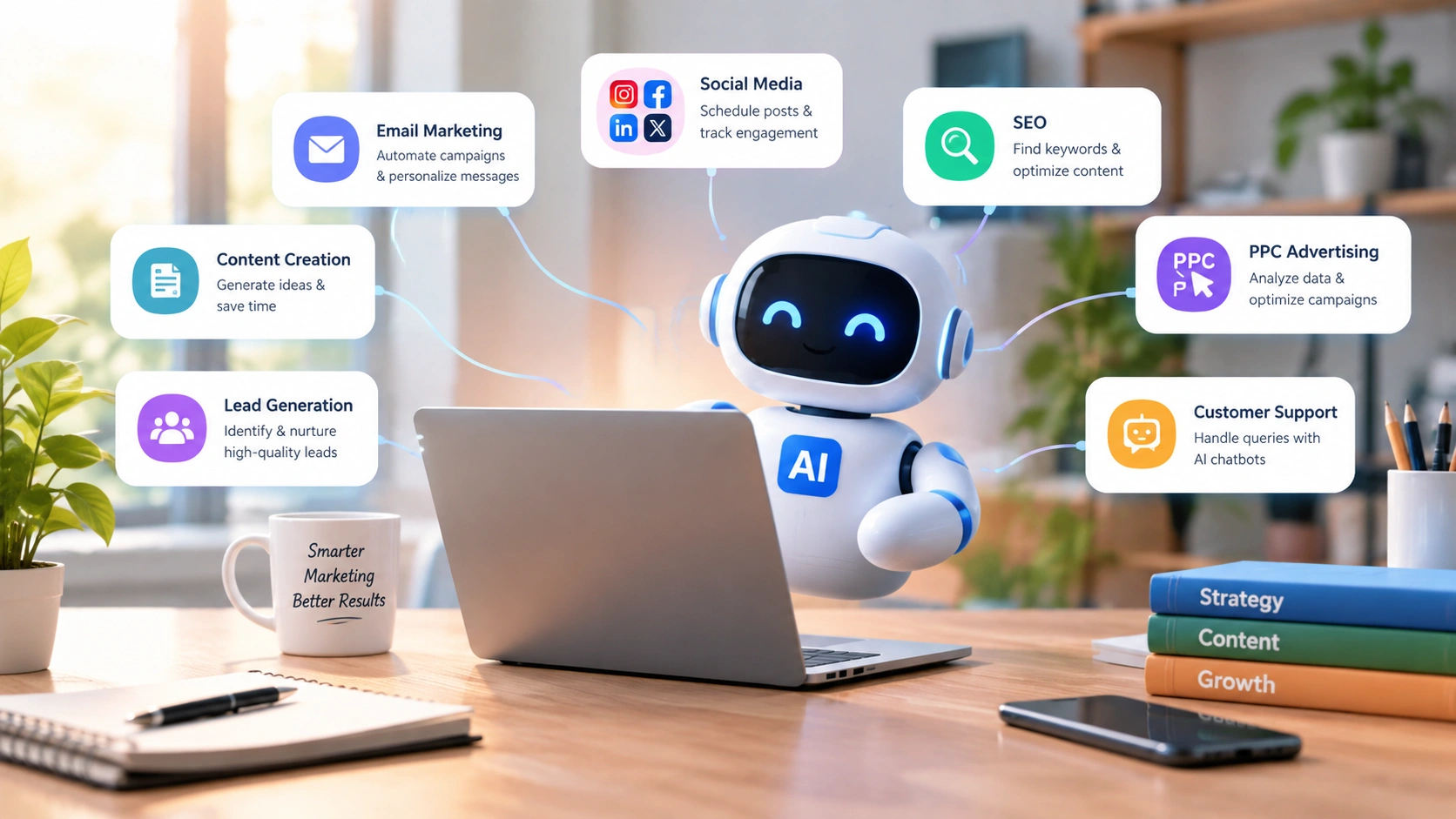
Digital marketing has become an important part of growing a business, but managing every task manually can take a lot of time. From replying to customer queries and sending emails to managing social media and analyzing campaign performance, marketers often have many things to handle at the same time.
This is where AI Marketing Automation can make a real difference.
Artificial intelligence helps businesses automate repetitive marketing tasks, understand customer behavior, create more personalized experiences, and make better decisions using data. Instead of replacing marketers, AI can help them spend less time on repetitive work and more time on strategy and creativity.
What Is AI Marketing Automation?
AI Marketing Automation is the use of artificial intelligence to automate and improve different digital marketing activities.
Traditional marketing automation follows predefined rules. For example, an email may automatically be sent when someone fills out a contact form.
AI can take this a step further. It can analyze customer behavior, identify patterns, predict what a customer may be interested in, and help businesses deliver more relevant content at the right time.
In simple words, AI Marketing Automation combines automation with intelligent decision-making.
How AI Helps Automate Digital Marketing
1. Automates Repetitive Marketing Tasks
Marketers spend a lot of time performing repetitive activities such as scheduling posts, sending follow-up emails, organizing leads, and preparing basic reports.
AI-powered automation can handle many of these tasks with minimal manual effort.
For example, when a visitor submits a form on a website, an automated system can send a confirmation email, add the lead to a CRM, and trigger a follow-up campaign.
This saves time and allows marketing teams to focus on more important activities.
2. Makes Email Marketing More Personal
Sending the same email to every customer may not always produce the best results.
AI can analyze information such as previous interactions, browsing behavior, and engagement patterns to help businesses create more relevant email campaigns.
For example, an online store can recommend products based on what a customer has previously viewed or purchased.
AI can also help marketers decide which type of content should be shown to different audience segments.
3. Improves Lead Generation and Follow-Ups
Not every lead has the same level of interest.
Some visitors may only be researching a product, while others may already be ready to make a purchase. AI can help analyze lead behavior and identify patterns that indicate stronger buying intent.
Automated follow-ups can then be triggered based on customer actions.
For example, if someone downloads an ebook, visits a service page several times, or submits an inquiry form, the system can automatically start a relevant follow-up sequence.
This can make the lead nurturing process more organized and consistent.
4. Helps With Social Media Management
Managing multiple social media platforms can be time-consuming.
AI tools can assist marketers with tasks such as generating content ideas, creating captions, analyzing engagement, and scheduling posts.
AI can also help identify which types of posts receive better engagement. Marketers can use these insights to improve their future content strategy.
However, human creativity is still important. AI can help with the repetitive parts, while marketers can focus on creating content that feels authentic and connects with the audience.
5. Supports SEO and Content Marketing
Creating useful content consistently is an important part of digital marketing.
AI can help marketers research topics, identify content opportunities, analyze search intent, organize content ideas, and improve existing content.
For example, marketers can use AI to identify questions customers frequently ask and then create helpful blog posts around those questions.
The goal should not be to publish content simply because AI can create it. The content should provide real value to readers and address their actual needs.
6. Improves PPC Campaign Management
Paid advertising requires continuous monitoring and optimization.
AI can help analyze campaign data, identify patterns, and provide insights into audience behavior. It can also support tasks such as audience segmentation, ad testing, and budget optimization.
This allows marketers to spend more time understanding campaign performance instead of manually checking every piece of data.
Human oversight remains important because marketing decisions should consider business goals, brand messaging, and the quality of leads—not just numbers.
7. Provides Faster Customer Support
Customers often expect quick answers when they have questions.
AI-powered chatbots can provide instant responses to common questions, such as pricing, service details, business hours, or order information.
For more complicated questions, the conversation can be transferred to a human representative.
This creates a balance where AI handles simple, repetitive queries while the marketing or support team focuses on conversations that require a personal touch.
8. Helps Understand Customer Behavior
One of the biggest advantages of AI is its ability to process large amounts of data.
AI can help businesses identify patterns in customer behavior, such as which pages people visit, what content they engage with, and where they leave the buying journey.
These insights can help marketers understand their audience better and create more relevant campaigns.
Benefits of AI Marketing Automation
Businesses can use AI marketing automation to improve several areas of their digital marketing process.
Some key benefits include:
- Saves time: Repetitive tasks can be automated.
- Improves personalization: Customers can receive more relevant content.
- Supports better decisions: AI can identify useful patterns in marketing data.
- Improves lead nurturing: Automated follow-ups help businesses stay connected with potential customers.
- Increases efficiency: Marketing teams can manage more activities without doing everything manually.
- Provides faster responses: AI chatbots can answer common customer questions quickly.
- Supports campaign optimization: Marketers can use AI-driven insights to improve their campaigns.
AI Does Not Replace the Human Side of Marketing
One common concern about AI is whether it will replace marketers.
In reality, successful digital marketing still needs human creativity, communication, strategy, and understanding of the audience.
AI can help analyze data and automate repetitive work, but businesses still need people to decide what their brand should say, who they want to reach, and how they want to build relationships with customers.
The best approach is often to use AI as a supporting tool rather than a complete replacement for human marketers.
How Businesses Can Get Started With AI Marketing Automation
Businesses do not need to automate everything at once.
A simple approach is to start with one repetitive task that takes considerable time. This could be email follow-ups, social media scheduling, lead management, or customer support.
After seeing the results, businesses can gradually introduce AI into other parts of their marketing workflow.
Before choosing an AI tool, it is also important to consider factors such as integration with existing platforms, data privacy, cost, scalability, and the amount of human control required.
Final Thoughts
AI is changing the way businesses approach digital marketing. From automating repetitive tasks to improving personalization and understanding customer behavior, AI can help marketing teams work more efficiently.
However, technology alone does not create a successful marketing strategy. Businesses still need useful content, a clear brand message, creative ideas, and a strong understanding of their customers.