
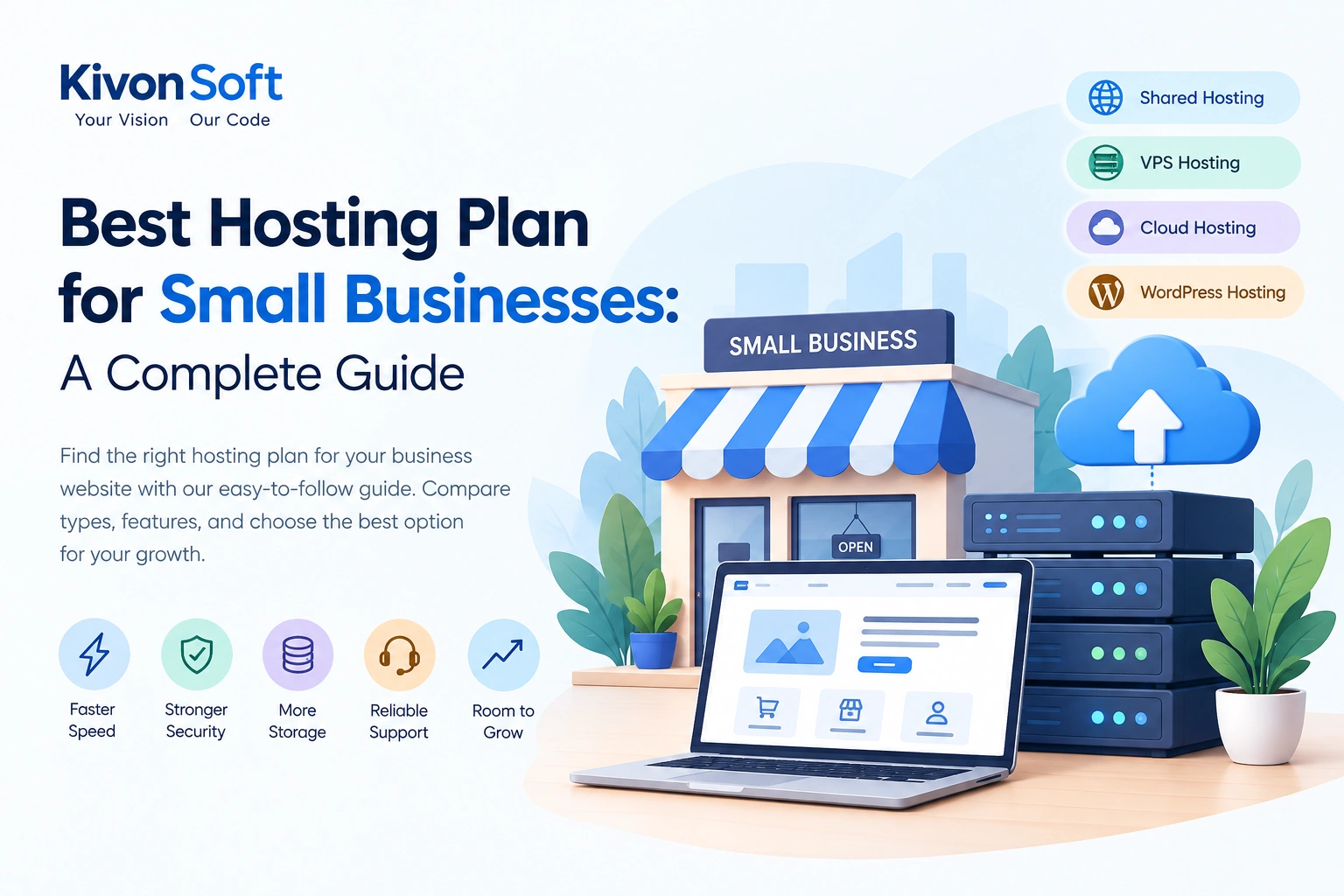
Choosing the best hosting plan for small businesses is an important step when building an online presence. A website is often the first place where potential customers learn about a business, so it needs to be fast, secure, reliable, and easy to manage.
With so many hosting options available, choosing the right plan can sometimes feel confusing. Small businesses usually don’t need the most expensive hosting package, but they do need a hosting solution that can support their website as the business grows.
In this guide, we’ll explain what website hosting is, the different types of hosting, and the key factors to consider when choosing the right hosting plan for your small business.
What Is Web Hosting?
Web hosting is a service that stores your website’s files, images, databases, and other resources on a server and makes them available online.
When someone enters your website address into a browser, the hosting server delivers the required files so the website can be displayed.
In simple words, your domain is your website’s address, while hosting is the space where your website lives.
Why Is Choosing the Right Hosting Plan Important?
The hosting plan you choose can affect several important aspects of your website.
1. Website Speed
A slow website can create a poor user experience. Good hosting can provide the resources needed to keep your website responsive and loading efficiently.
2. Website Security
Businesses need to protect their websites and customer information. Features such as SSL certificates, malware protection, firewalls, and regular backups can help improve website security.
3. Reliability and Uptime
Customers should be able to access your website when they need it. Reliable hosting helps reduce downtime and keeps your website available.
4. Scalability
Your website may receive more visitors as your business grows. A suitable hosting provider should allow you to upgrade your resources when needed.
5. Technical Support
Technical problems can be difficult to handle, especially for small businesses without a dedicated IT team. Responsive hosting support can make it easier to resolve server or website-related issues.
Types of Hosting for Small Businesses
There are several types of web hosting available. The right choice depends on your website’s size, traffic, features, and future requirements.
Shared Hosting
Shared hosting allows multiple websites to use resources on the same server.
It is often suitable for:
- Small business websites
- Portfolio websites
- Blogs
- New websites
- Websites with moderate traffic
Shared hosting is generally affordable and easy to manage, making it a practical option for businesses starting their online journey.
VPS Hosting
VPS stands for Virtual Private Server. It provides a dedicated portion of server resources within a virtualized environment.
VPS hosting can be useful when your website needs more resources, control, or flexibility than a typical shared hosting plan provides.
It may be suitable for:
- Growing business websites
- Websites with increasing traffic
- Web applications
- Businesses requiring more server control
Cloud Hosting
Cloud hosting uses a network of connected servers to host websites and applications.
It can provide flexibility and scalability, which can be useful for businesses experiencing changing traffic levels or planning for future growth.
Managed WordPress Hosting
If your business website is built with WordPress, managed WordPress hosting can be another option.
Depending on the provider, managed WordPress plans may include features such as WordPress-focused support, automatic updates, backups, security tools, and performance optimization.
How to Choose the Best Hosting Plan for Small Businesses
Before selecting a hosting plan, consider your website’s current needs as well as your future goals.
1. Understand Your Website Requirements
Start by asking:
- What type of website are you building?
- How many visitors do you expect?
- Will you use WordPress?
- Do you need an online store?
- How much storage will you need?
- Do you expect traffic to grow?
A simple company website may require fewer resources than an eCommerce website with hundreds of products.
2. Check Storage and Bandwidth
Storage determines how much website data you can store on the server.
Bandwidth is related to the amount of data transferred between your website and its visitors.
If your website contains many images, videos, downloadable files, or products, you may need more resources.
3. Look for an SSL Certificate
SSL helps establish an encrypted connection between a website and its visitors.
An HTTPS-enabled website also gives visitors a clearer indication that their connection is protected.
4. Consider Backup Options
Website problems can happen because of accidental changes, technical issues, security incidents, or other reasons.
Regular backups can help you restore your website when something goes wrong. Before purchasing a plan, check whether backups are included and how frequently they are performed.
5. Check Server Performance
Website performance matters for both users and search engines.
When comparing hosting plans, look at factors such as server resources, caching options, content delivery network (CDN) support, and the hosting provider’s infrastructure.
6. Consider Customer Support
Good customer support can save time when you experience hosting or server-related problems.
Check whether the provider offers support through channels such as:
- Live chat
- Support tickets
- Phone support
- Knowledge base or documentation
7. Think About Scalability
Don’t choose a hosting plan only according to your current traffic.
If your business grows, your website may need additional storage, processing power, or bandwidth. A hosting provider that allows easy upgrades can make this transition smoother.
Hosting Features Small Businesses Should Look For
When comparing hosting plans, consider features such as:
- SSL certificate
- Regular backups
- Security protection
- Reliable uptime
- Adequate storage
- Sufficient bandwidth
- Performance optimization
- Easy control panel
- WordPress support, if required
- Scalable resources
- Customer support
- Domain and email support
Not every business needs every feature, so focus on the ones that match your website’s requirements.
What About eCommerce Websites?
If you are planning to run an online store, your hosting requirements may be different from those of a simple business website.
An eCommerce website may need additional resources for:
- Product catalogs
- Customer accounts
- Shopping carts
- Payment processing
- Order management
- Product images
- Database operations
For an online store, look for a hosting plan that provides sufficient server resources, security features, backups, and room for future growth.
Common Hosting Mistakes Small Businesses Should Avoid
Choosing Only Based on Price
The cheapest plan may not always be the right option. Consider performance, security, support, resources, and upgrade options along with price.
Buying More Resources Than You Need
On the other hand, you don’t necessarily need an expensive high-resource server for a small website.
Choose a plan that matches your actual requirements and upgrade when necessary.
Ignoring Renewal Prices
Some hosting providers offer introductory pricing that changes when the plan renews.
Always check both the initial price and the renewal price before purchasing.
Not Checking Backup Policies
Don’t assume that every hosting plan provides the same backup features. Check what is included and how backups are handled.
Ignoring Customer Support
When your website is down or experiencing a technical problem, quick support can be extremely valuable.
How Much Should a Small Business Spend on Hosting?
There is no single hosting price that works for every business.
The cost depends on factors such as:
- Type of hosting
- Server resources
- Storage
- Traffic requirements
- Security features
- Backup options
- Support
- Additional services
A new small business website can often start with a basic hosting plan and upgrade as its requirements increase.
The important thing is to choose a plan based on value and requirements, rather than simply choosing the cheapest or most expensive option.
Final Thoughts
Choosing the best hosting plan for small businesses doesn’t have to be complicated. Start by understanding your website’s requirements and then compare hosting options based on performance, security, storage, backups, support, scalability, and overall value.
A small informational website may work well with a basic hosting solution, while a growing website or online store may require VPS, cloud, or specialized hosting.
The right hosting plan should support your website today while giving your business room to grow tomorrow.
Frequently Asked Questions
1. What is the best hosting plan for a small business?
The best hosting plan depends on your website’s requirements, traffic, budget, and future growth. A basic business website may need only a standard hosting plan, while a growing or resource-intensive website may require VPS or cloud hosting.
2. Is shared hosting good for a small business?
Yes. Shared hosting can be suitable for small business websites with moderate traffic and standard requirements. It is generally easier to manage and more affordable than many advanced hosting options.
3. Do small businesses need an SSL certificate?
An SSL certificate is important for websites because it helps encrypt data exchanged between visitors and the website and enables HTTPS.
4. Can I upgrade my hosting plan later?
Many hosting providers offer upgrade options, allowing businesses to increase resources as their website grows. Always check the provider’s upgrade and migration policies before purchasing.
5. Should I choose hosting based only on price?
No. Price is only one factor. You should also consider performance, security, backups, uptime, support, resources, and scalability.
6. Which hosting is suitable for a WordPress business website?
A WordPress-focused hosting plan can be a suitable option for businesses using WordPress. The right choice depends on traffic, website size, performance requirements, and available features.